
The portal defaults are sensible; the toggles are where you fit it to the engagement.
Portal configuration

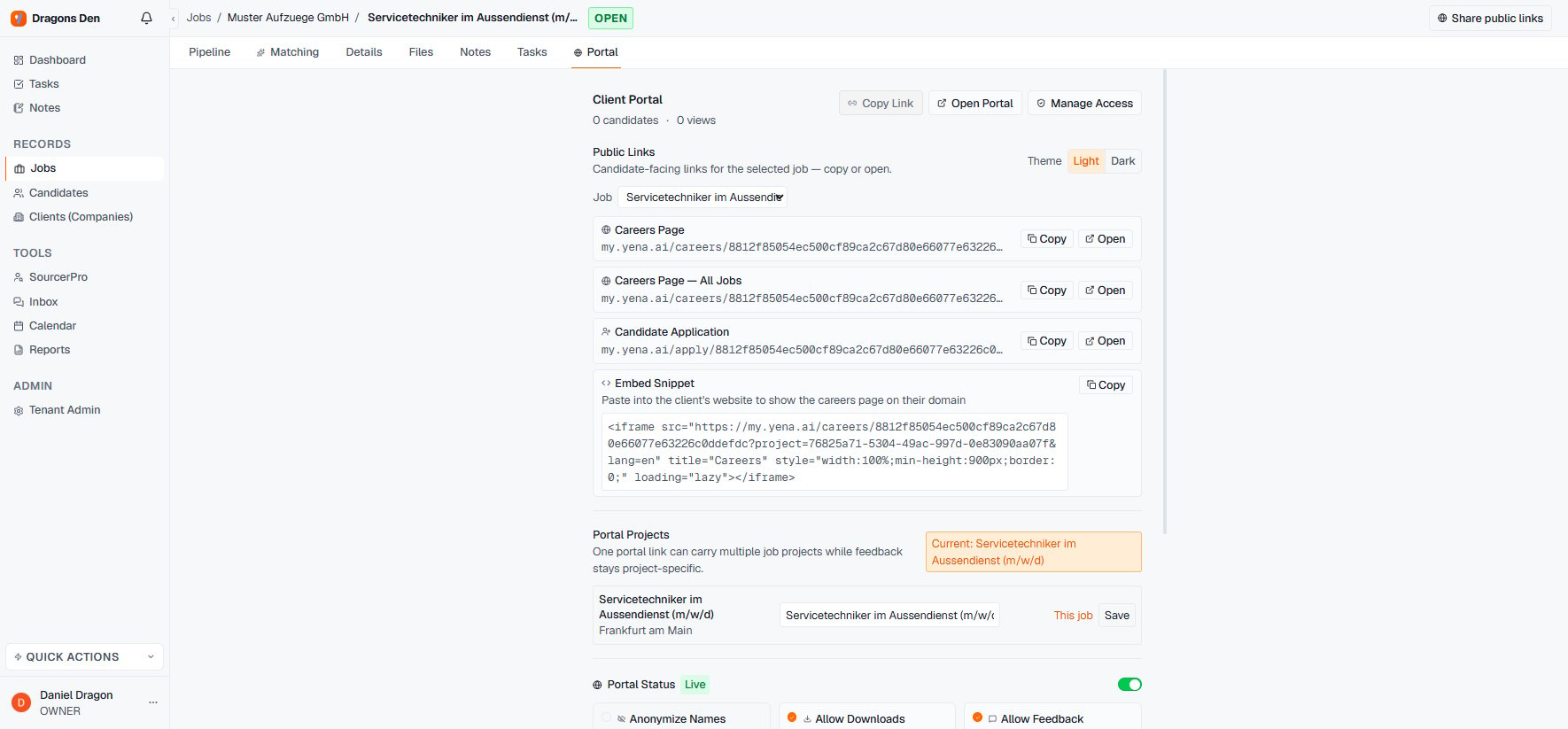
The Portal tab: links, projects, status, and toggles

The three toggles

  • Anonymize Names — the client sees profiles without identities. The pre-contract setting: it protects candidates from being approached directly and protects your fee. Flip it off once terms are signed.
  • Allow Downloads — client can download CVs and documents you attached to the records. Off means view-only.
  • Allow Feedback — comments and ratings on candidates, which land back with your pipeline. This is usually the whole point; leave it on unless the review is strictly one person’s yes/no.

Branding and details

Client Branding & Details carries the client-facing identity — the portal reads as a service you run for them, “Presented by [your firm] · Powered by Yena”. Enter the client’s website and Import branding fetches their logo and brand color and applies both immediately — the whole portal wears the client’s color, not a default palette. No color found on their site? One is sampled from their logo. You can still override either by hand.

Presentation stages

Tenant Admin → Client Portal → Client presentation stages names the pipeline stages (default: Longlist, Shortlist) that add candidates to a job’s portal automatically the moment they arrive there — no second add. Leaving the stage never removes anyone.

Status and access

Portal Status: Live is the master switch: flip it off and the link stops resolving without deleting anything. Manage Access controls who can reach it, and the candidate/view counters tell you whether the client actually looked — worth checking before you chase them.