> ## Documentation Index
> Fetch the complete documentation index at: https://support.yena.ai/llms.txt
> Use this file to discover all available pages before exploring further.
# Writing a brief the Sourcer can work with
> What separates a brief that returns a strong shortlist from one that returns noise.
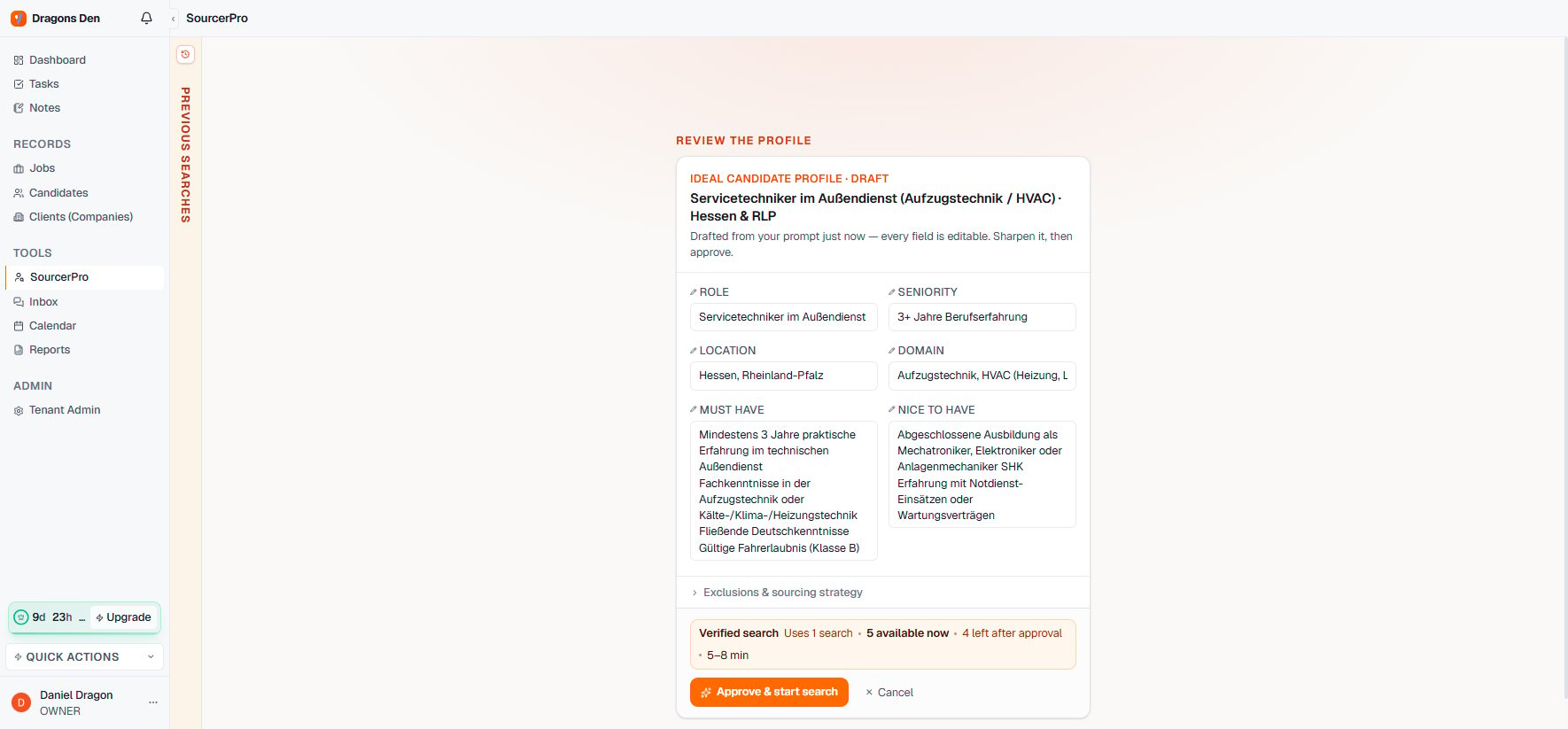
The Sourcer is only as good as the brief you give it. The good news: a strong brief is the same thing as a strong intake call, written down.
## Include the hard constraints
* **Role and seniority.** "Teamassistenz im Vertrieb" and "Head of Sales" are different searches. Say which band you mean, and whether adjacent titles count.
* **Location.** City, region, or radius, plus whether remote or hybrid changes the pool.
* **Must-haves vs nice-to-haves.** The Sourcer treats explicit constraints as gates. Bury the dealbreaker in a wish-list and it stops being a dealbreaker.
* **Language requirements.** Often the single most filtering constraint in DACH searches. Say it explicitly.
 ## Leave out the boilerplate
Company mission paragraphs, benefits lists, and "dynamic team player" phrasing don't help ranking. If a sentence wouldn't change who you'd shortlist, it won't change what the Sourcer returns either.
## Iterate instead of over-specifying
Start with the real constraints, look at the first shortlist, then refine.
A thin result on a tight brief is information too: it may mean the market for that exact profile is small, which is worth knowing before you promise a client twelve candidates.
## Leave out the boilerplate
Company mission paragraphs, benefits lists, and "dynamic team player" phrasing don't help ranking. If a sentence wouldn't change who you'd shortlist, it won't change what the Sourcer returns either.
## Iterate instead of over-specifying
Start with the real constraints, look at the first shortlist, then refine.
A thin result on a tight brief is information too: it may mean the market for that exact profile is small, which is worth knowing before you promise a client twelve candidates.